Quick answer
Independent optometrists borrow for diagnostic equipment such as OCT scanners and retinal cameras, frame and lens stock, shop fit-outs, second locations and buying into or out of a practice. Lenders look at consulting income versus optical dispensing sales, stock turn, health fund rebate timing, the lease and who owns the patient book. Steady practices often suit unsecured options; purchases go further with property security.
Key points
- Optometry blends a clinical service with a retail optical shop.
- Frame and lens stock can quietly absorb working capital.
- Diagnostic equipment is expensive and upgrades in cycles.
- Registration with the Optometry Board of Australia must be current.
- Common uses
- OCT, frames, fit-outs, buy-ins
- Lenders focus on
- Dispensing mix, stock, lease
- Unsecured options
- Typically $5k – $500k
- Property-secured
- $20k – $5m
An independent optometry practice is really two businesses under one roof: a clinic that earns consulting fees and a shop that sells frames, lenses and contacts. Lenders who understand optometry look at both halves. The clinical side brings patients through the door; the dispensing side is where most of the margin and most of the cash tied up in stock sits.
What do optometrists typically borrow for?
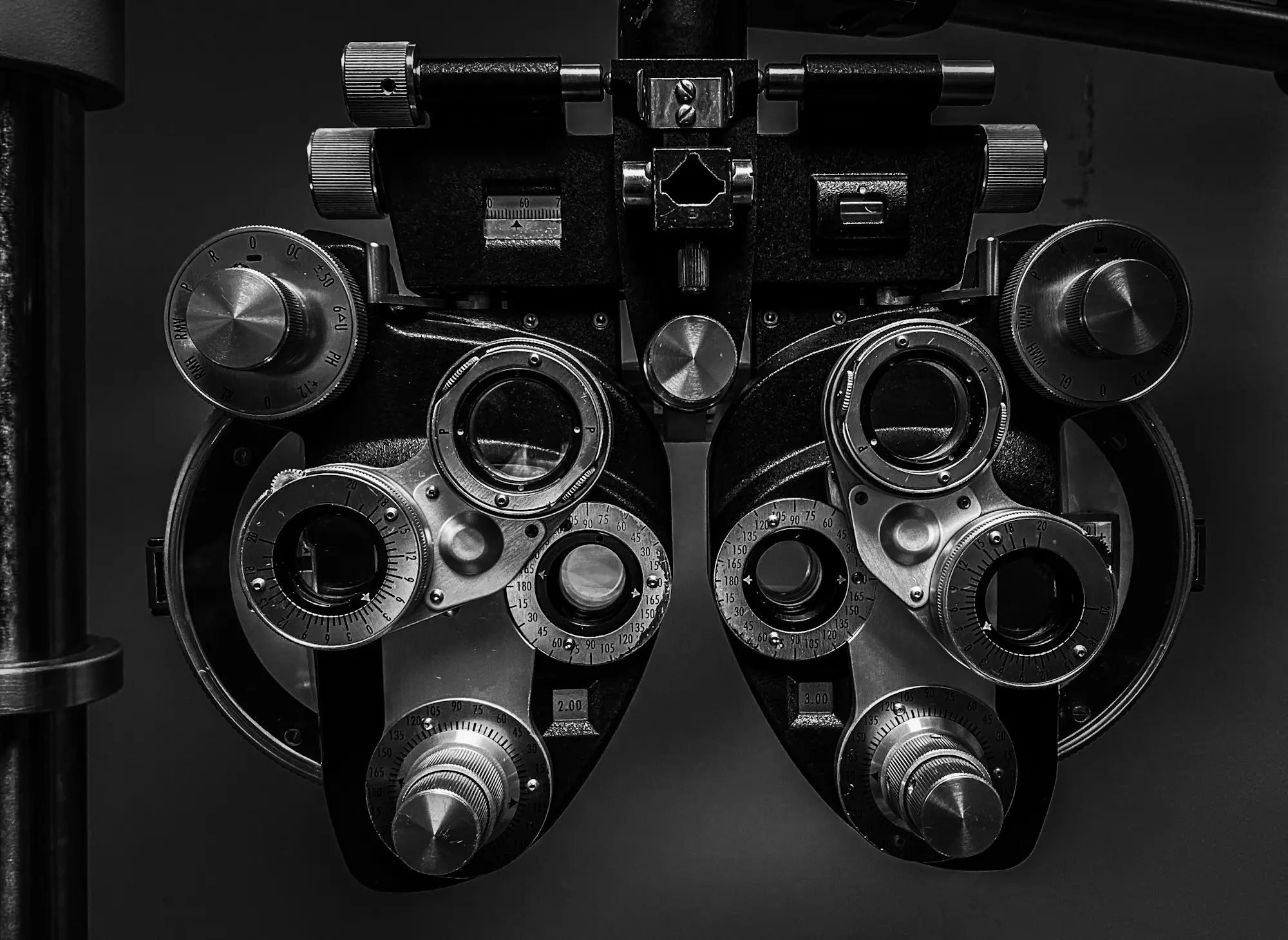
- Diagnostic equipment. OCT scanners, retinal cameras, visual field analysers, slit lamps and refraction units. These are the big-ticket items and tend to be replaced or upgraded in waves.
- Frame and lens stock. A fresh frame wall, a new designer range or a stock top-up before a busy period.
- Fit-outs and refits. Consulting rooms, a lab or edging area, and a retail floor that competes with the chains.
- A second location. Often in a nearby shopping strip or a regional town without an independent optometrist.
- Buying in or buying out. Purchasing a share from a partner, or the whole practice from a retiring owner.
How do lenders read an optometry practice?
Consulting and dispensing mix. Lenders want to see how revenue splits between eye examinations and optical sales. A practice where most patients who need glasses buy them in-house converts its clinical work into retail income efficiently. Where patients take their script elsewhere, the business is more exposed.
Stock turn. Frames and lenses are where cash quietly disappears. A lender may ask how much stock you hold and how long it takes to sell through. Consignment arrangements with suppliers help, because the practice isn’t paying for every frame on the wall up front.
Registration and staffing. Every optometrist must be registered with the Optometry Board of Australia. Lenders expect registrations to be current and want to know whether the income depends on one optometrist or several.
Rebates and banked income. Medicare and private health fund claims processed at the counter flow into the account as normal deposits. Twelve months of clean statements is usually the backbone of an application.
Lease security. A fitted-out practice in a shopping centre or strip is costly to move. Lenders check how long the lease has to run and whether options exist.
Weighing up a new OCT or a refit? See whether your practice qualifies in about a minute, and your credit file stays untouched while you ask.
Equipment loan, lease or general facility?
| Option | How it works | Suits |
|---|---|---|
| Equipment finance or chattel mortgage | Loan secured over the specific machine | A single high-value diagnostic unit |
| Finance lease | Lender owns the gear; you pay to use it | Practices that upgrade technology often |
| Unsecured business loan | Sized on turnover and bank statements | A mix of equipment, stock and refit costs |
| Property-secured loan | Secured over residential or commercial property | Practice purchases, second sites, larger fit-outs |
The business.gov.au guide to leasing or buying equipment sets out the trade-offs between owning and leasing, including tax treatment and upgrade flexibility. For a single machine, medical equipment finance is usually the cleanest structure. When the spend covers equipment, joinery and stock together, one general facility is often simpler than three separate contracts.
A closer look: the frame wall problem
Independent optometrists compete with the chains on care and on choice. Choice means stock. A practice adding a boutique frame range might commit a meaningful sum before a single pair sells, and lenses are often ordered per job, which adds lab costs and timing gaps.
Where the frame wall turns over steadily, this is healthy working capital. Where it doesn’t — a range that never caught on, a supplier minimum order that was too big — cash sits on the wall. Lenders see this in the numbers: rising stock, steady sales and a shrinking bank balance. Practices that review sell-through by brand, negotiate consignment and run down slow ranges present a much stronger picture.
What documents will you need?
- Six to twelve months of business bank statements
- Practice management and point-of-sale reports showing consulting and dispensing income
- Registration details for each optometrist
- Lease and any options or assignment documents
- Supplier quotes for equipment or fit-out
- BAS and recent financial statements
When is the right time to arrange finance?
Earlier than most owners think. Equipment suppliers often run end-of-financial-year offers, and frame companies launch new ranges on a set calendar, so the best deals arrive on someone else’s timetable. A practice that has a facility approved before it signs a quote can negotiate as a cash buyer and avoid paying for gear out of the operating account. The same applies to a buy-in: talking to a lender while negotiations are still friendly gives you a realistic ceiling before you make an offer, rather than discovering it after a deposit is paid.
Red flags lenders notice
- Income concentrated in one optometrist who could leave or retire.
- Stock climbing faster than sales.
- Several overlapping equipment leases already eating cash flow.
- A short lease on a heavily fitted-out shop.
- Tax debt from a growth year, which is considered case by case.
Illustrative example
Illustrative example: a two-optometrist practice in a regional town wants $85k for an OCT scanner, a new refraction unit and a refreshed frame wall. Its statements show steady consulting income and strong in-house dispensing. Because the spend mixes equipment and stock, the owner takes an unsecured facility sized on turnover rather than separate equipment contracts. A year later, the same owner buys out a retiring partner for $350k, secured with a second mortgage over the family home so repayments stay manageable while the patient book transitions.
Buying into an existing practice
Practice purchases are where optometrists borrow the most. Lenders look at the trading history, how many patients are recalled and return, the seller’s role during handover and whether staff stay. The business.gov.au checklist on buying an existing business covers due diligence in plain terms. Our page on business acquisition loans explains how purchase finance is structured, and the medical centre guide shows how lenders view practitioner-dependent income more broadly.
Secured or unsecured for an optometrist?
Most equipment, stock and refit needs fit unsecured lending of $5k to $500k, sized on turnover and bank statements. Buy-ins, purchases and multi-site growth often call for property-secured loans from $20k to $5m. Our secured or unsecured tool helps you work out which lane suits before you enquire.
Ready to give your practice room to grow?
Whether it’s a new scanner or a partner buyout, the next step takes about sixty seconds. Asking won’t leave a mark on your credit history, and your enquiry isn’t scattered across dozens of lenders, so your phone stays quiet. Someone who knows how optometry practices work will look at your numbers and ring you. Fill the form in accurately — turnover, the amount you need and any property you own — so the first option we bring you is the right one.
Frequently asked questions
Can an independent optometrist borrow for an OCT scanner?
Yes. Diagnostic equipment is one of the most common reasons optometrists borrow. A practice with steady banked income can often use an unsecured facility or equipment finance, and the lender will want the supplier quote.
Do lenders count health fund rebates as income?
They count what lands in your business account. Rebates processed on the spot through a claiming terminal show up as normal deposits, which makes the income easy for a lender to read.
Can I borrow to buy out a retiring optometrist?
Yes. Lenders look at the practice's trading history, how much of the patient book stays after the handover and whether the seller will work through a transition. Property security usually supports a larger purchase.
Will a big frame inventory help my application?
Not much on its own. Lenders focus on how quickly stock sells. A large wall of slow-moving frames can look like cash tied up rather than an asset.
Can a new graduate open a practice with a loan?
It's possible, but a brand-new practice has no trading history, so lenders lean on the owner's experience, a realistic plan and often property security.