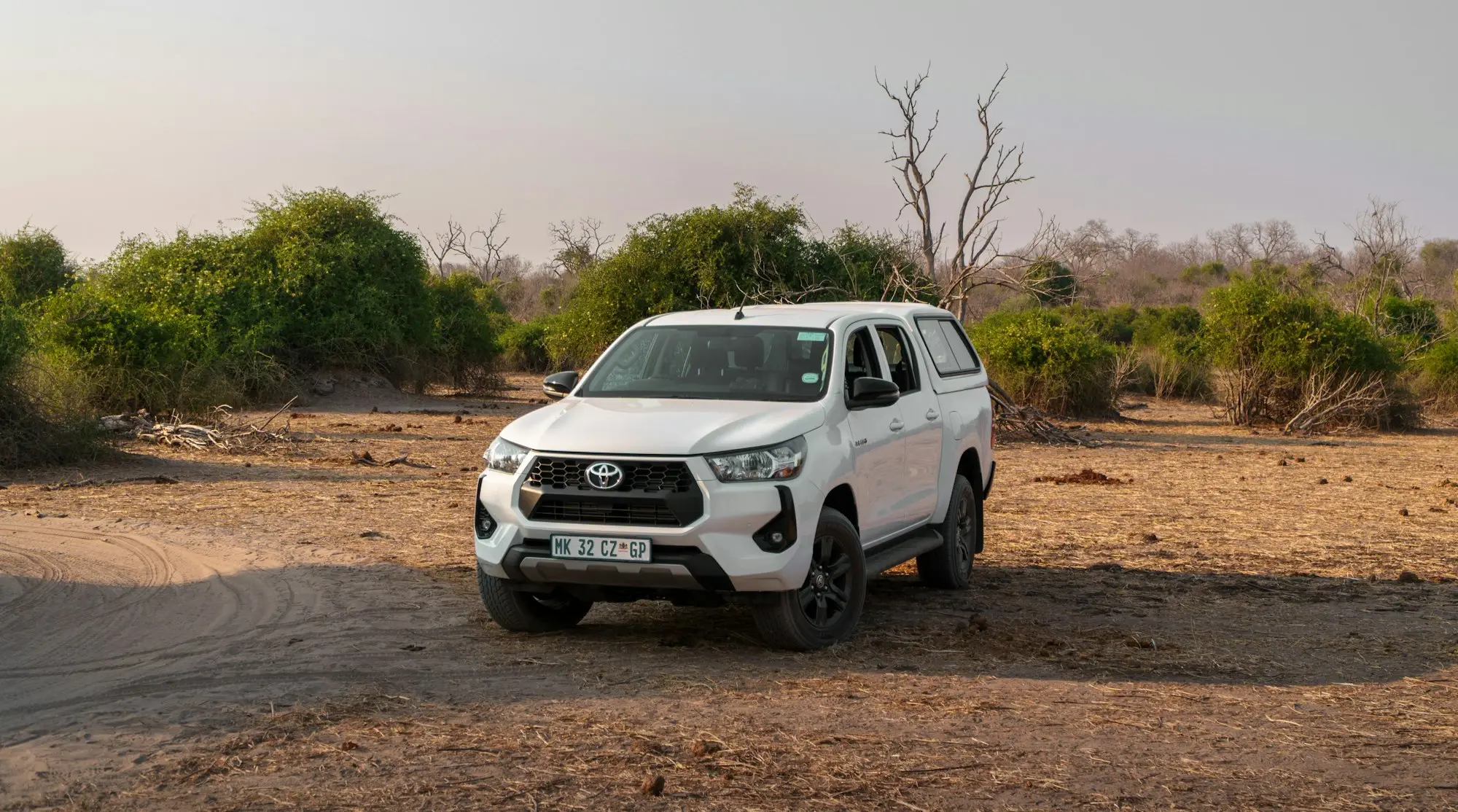
Quick answer
Business vehicle finance pays for a car, ute or van used mainly for business, with the vehicle as security. It suits sole traders, companies and trusts that would rather keep cash in the business. Lenders look at the vehicle's age and value, your ABN and trading history, bank statements and credit, then usually offer a chattel mortgage, finance lease or novated arrangement with an optional balloon.
Key points
- Finance is in the business's name and secured by the vehicle.
- Business-use percentage drives GST credits and tax claims, not the loan approval.
- The ATO caps depreciation on cars each year with the car limit.
- Private sales need a PPSR check for finance owing, write-offs and theft.
- Vehicles
- Cars, utes, vans, light commercials
- Security
- The vehicle
- Common structures
- Chattel mortgage, finance lease
- 2025–26 car limit
- $69,674 (ATO)
Most Australian businesses run on wheels. The tradie’s ute, the florist’s van, the sales rep’s car: they’re working assets, and financing them through the business rather than personally usually makes more sense for cash flow and tax. Business vehicle finance does exactly that, with the vehicle as security and repayments coming from business income.
What vehicles does business vehicle finance cover?
Passenger cars, dual-cab and single-cab utes, vans, people movers and light commercials. Once you’re into heavier rigs with a gross vehicle mass above the light-vehicle range, prime movers or trailers, you’re in truck finance territory, where the assessment and the asset market are quite different.
New and used vehicles both qualify. Lenders generally cap how old a vehicle can be at the end of the loan, so a ten-year-old ute might suit a short term but not a long one.
How does it work, step by step?
- Choose the vehicle and get a dealer invoice, or the private seller’s details.
- Apply in the business’s name, whether that’s you as a sole trader, a partnership, a company or a trust.
- The lender assesses the vehicle, your trading and your credit.
- Settlement: the lender pays the dealer or seller, registers its security interest, and you pick up the keys.
- Repay over the term, with an optional balloon at the end.
The two most common structures are a chattel mortgage, where the business owns the vehicle from day one, and a finance lease, where the financier owns it until the residual is paid. Employees sometimes use novated leases through salary packaging, which is a separate arrangement between employer, employee and financier.
What do lenders look at for a business vehicle?
- The vehicle: make, model, year, kilometres and price relative to market value.
- How long you’ve held your ABN and been registered for GST, if you are.
- Trading evidence: recent BAS, tax returns or business bank statements, depending on how much paperwork the lender asks for.
- Credit files: yours and the business’s. Past issues and ATO debt are considered case by case.
- The rest of your commitments, including other vehicle loans in the fleet.
Established businesses buying from dealers often qualify on light documentation. Newer ABNs may be asked for a deposit or extra evidence of income. If that sounds like you, tell us about the vehicle you’re after and we’ll work out what fits.
What tax and GST points should you know?
Finance and tax are separate decisions, but they collide when you buy a vehicle.
- GST credits. If you’re registered for GST and use the vehicle for business, you may be able to claim a GST credit, reduced for any private use. The business.gov.au guide flags this for both buying and leasing.
- The car limit. The ATO caps the cost you can use to work out depreciation on a car. For 2025–26 the car limit was $69,674, with a maximum GST credit of $6,334. Whether a particular ute or van counts as a “car” for this purpose depends on its design, so ask your accountant before assuming either way.
- Luxury car tax. The same ATO page set 2025–26 luxury car tax thresholds at $91,387 for fuel-efficient vehicles and $80,567 for other vehicles.
These figures are reviewed each financial year, so check the current year with your accountant before you buy.
Dealer or private sale: what changes?
| Dealer sale | Private sale | |
|---|---|---|
| Paperwork | Dealer tax invoice | Seller ID, registration papers, bill of sale |
| GST | Usually included and claimable if registered | Usually no GST to claim |
| Checks | Dealer handles most of it | PPSR search, inspection, proof of ownership |
| Lender comfort | Higher | Fine, with extra steps |
A PPSR car check shows whether there’s a security interest recorded against the vehicle, and whether it’s recorded as written off or stolen. The register recommends searching on the day of purchase or the day before, because the closer to settlement, the more current the result.
Illustrative example
Illustrative example: An electrician who has traded for three years under a company wants a used dual-cab ute with a canopy, priced at $55k from a private seller. The lender orders an inspection, runs the PPSR search and confirms the seller owns the vehicle outright. With steady bank statements and no tax debt, the business finances the ute over five years under a chattel mortgage, choosing a small balloon it’s confident the ute will cover at trade-in.
Can a newer ABN get vehicle finance?
It’s one of the most common questions, and the answer is usually yes, with conditions. Lenders look at how long the ABN has been active and, where relevant, how long you’ve been registered for GST. A very new ABN tells them little, so they lean on other things: your work history in the same trade, a clean personal credit file, a deposit, or property you own. A mainstream ute from a dealer is far easier to approve in those early months than a high-end European car.
Owning property also changes the conversation, even if you don’t want to use it as security. Lenders see it as a sign of stability. If your first year has been patchy, the new business loans page explains the wider options, and the secured or unsecured check shows which path suits your situation.
Chattel mortgage or lease for a vehicle?
For most businesses that plan to keep a ute or van for years and run it hard, ownership from day one under a chattel mortgage is the natural fit. A lease can make sense for vehicles you’ll replace on a set cycle, or when you’d rather not carry the vehicle as an asset. Either way, ask your accountant how each choice affects GST credits and deductions before signing.
Common mistakes with business vehicle finance
- Setting the balloon too high. If the vehicle is worth less than the balloon at the end, you’ll need to find the difference.
- Financing personally for a business vehicle. It can complicate tax claims and tie up your personal borrowing capacity.
- Ignoring on-road costs. Registration, stamp duty and insurance add up; know what’s being financed and what isn’t.
- Skipping the logbook. Your business-use percentage underpins your tax and GST claims.
Running several vehicles? The asset finance page explains fleet facilities, and the industry finder shows what other trades typically finance.
Get your next vehicle on the road
If you’ve picked the vehicle, or you’re close, the next step is short. The enquiry takes around 60 seconds and asking costs you nothing on your credit file. Your details won’t be handed around a room full of lenders; one real person reviews your situation, considers the vehicle and how you use it, and calls you back. The more accurate your answers on the form, especially about the vehicle, your trading and any property you own, the better the first option we bring you.
Frequently asked questions
Can a sole trader get business vehicle finance?
Yes. Sole traders with an ABN can finance a vehicle for business use. Lenders look at your trading history, tax returns or bank statements, and personal credit, since a sole trader and the business are the same legal person.
Can I finance a vehicle bought privately?
Usually, yes. The lender will want an inspection or valuation, proof the seller owns it, and a clear PPSR result showing no finance owing and no write-off or theft record. Expect a little more paperwork than a dealer sale.
What's a balloon payment on a car loan?
It's a lump sum due at the end of the term. It lowers your regular repayments but has to be paid, refinanced or covered by trading the vehicle in. Set it at a level the vehicle is realistically likely to be worth by then.
How old can the vehicle be?
Lenders usually set a maximum age at the end of the term, which varies between lenders and vehicle types. Older vehicles are still financeable, but the term may be shorter or a deposit required.
Do I need to use the vehicle only for business?
The finance is for business use, and the vehicle should be used predominantly for business. Private use affects how much GST and tax you can claim, so keep a logbook and talk to your accountant about the split.
Should I finance through the dealer?
Dealer finance is convenient, and business.gov.au notes it may include a balloon to keep repayments down. It's worth comparing against other options on the total cost over the term before you sign.