Quick answer
Lenders financing a truck, excavator, tractor or work vehicle usually require comprehensive cover for the machine's full value, with the lender noted as an interested party, before funds are released. Cover should match how and where the machine is used. The biggest risks for owners are underinsurance, unlisted operators or uses, and a loan balance that's higher than what the insurer would pay out.
Key points
- Most lenders want comprehensive cover in place before settlement, with their interest noted.
- Insure for a value that reflects the machine, and check whether it's agreed or market value.
- Operator, location and use restrictions in a policy can quietly void a claim.
- If the payout is less than the loan, you still owe the difference.
- Machinery breakdown and business interruption cover protect income, not just the asset.
Lenders almost always require insurance on a financed truck, excavator, tractor or work vehicle. Expect to need comprehensive cover for the machine’s full value, with the lender noted as an interested party, and a certificate of currency before funds are released. The real risk isn’t the requirement itself, it’s cover that doesn’t match how the machine is actually used.
Insurance tends to be the last thing sorted on settlement day, often in a rush on the phone with the dealer waiting. That’s a shame, because the policy you choose for a financed asset can matter as much as the loan itself. This guide covers what lenders ask for when they provide yellow goods finance, truck loans or farm machinery loans, why they ask, and the gaps that catch owners out.
Why do lenders insist on insurance?
When you finance a machine, the machine is the lender’s security. If it’s stolen, burnt out, rolled or written off, the security disappears, but the loan doesn’t. Insurance keeps the security intact.
Business.gov.au makes the same point from the owner’s side in its guide to leasing or buying vehicles and equipment: with a secured loan, the asset can be repossessed if repayments aren’t made. Without insurance, a single bad day could leave you with no machine, no income from it, and a loan still to pay.
What do lenders typically require?
Exact requirements vary between lenders and asset types, but most finance contracts ask for something like this.
| Requirement | What it means for you |
|---|---|
| Comprehensive cover | Covers accidental damage, fire and theft, not just third party |
| Full insured value | Insured for at least the amount financed or the asset’s value |
| Lender noted as interested party | The lender is paid first on a total loss, up to the loan balance |
| Certificate of currency before settlement | Proof cover is active from the moment you take delivery |
| Continuous cover for the term | No gaps when renewing or switching insurers |
| Notice of changes | Tell the lender if you change insurer, use or location |
For trucks, compulsory third party personal injury cover usually comes with registration, as business.gov.au notes in its list of business insurance types. That doesn’t cover damage to the truck itself, which is what the lender cares about.
Which policy details cause problems at claim time?
Owners rarely get caught by not having insurance at all. They get caught by details in the policy that don’t match reality.
- Operators. Some policies restrict who can operate a machine, by age, licence, experience or by name. If an unlisted operator is in the seat when something goes wrong, the claim may be reduced or refused.
- Use. A truck insured for local delivery and then used on interstate work, or an excavator insured for landscaping and then sent to a demolition job, may not be covered for that use.
- Location and storage. Some machinery policies have conditions about where plant is kept overnight or on remote sites, or require security measures.
- Hire to others. If you hire machines out, check your policy covers that. Our guide to plant hire fleet finance covers the hire side, including PPSR registration for long-term hires.
- Transport. Plant being floated between sites may need goods in transit or specific cover while on the trailer.
- Modifications. GVM upgrades, cranes, bodies and attachments should be declared, or they may not be covered.
Read the policy wording, not just the summary. If something about your work is unusual, tell the insurer in writing.
What happens if the payout is less than the loan?
This is the gap that hurts most. Machines and trucks depreciate, and if your loan balance falls more slowly than the machine’s value, a total loss can leave you owing the lender more than the insurer pays.
Common causes include:
- a large balloon on an asset that loses value quickly
- market value cover on an older machine
- a long term on a used machine bought above its true value
- add-ons and fees financed but not insured
Ways to reduce the risk:
- Choose agreed value cover where it suits, and review the value at each renewal.
- Keep balloons realistic for the asset type.
- Ask whether gap-style cover is available for your asset.
- Don’t over-capitalise the loan with extras that have no resale value.
If you’re weighing up a deal right now, a quick enquiry is a good way to sense-check the structure before you sign.
What about cover for the income the machine earns?
The lender’s requirements protect the asset. Your business also needs protecting from the loss of income when that asset is out of action. Business.gov.au describes machinery breakdown insurance as covering repair or replacement of broken-down machinery, and business interruption cover as paying ongoing business costs when an insured event stops you trading.
For a one-truck owner-driver, a contract harvester with one header, or an earthmover with two key machines, a breakdown in peak season can cost more than the repair. That’s when cover beyond the lender’s minimum earns its premium.
How should insurance fit into your repayment budget?
Owners often budget carefully for the loan repayment and then treat insurance as an afterthought. For heavy machinery and trucks, the annual premium can be a meaningful cost, and it usually lands as one bill unless you arrange to pay it in instalments.
A few habits keep it under control:
- Get the quote before you sign the finance. The premium on a high-value or specialised machine can change whether the whole deal is affordable.
- Budget it monthly. Even if you pay annually, set aside a monthly amount so renewal doesn’t collide with a quiet trading month.
- Review at each renewal. As the loan balance falls, check that the insured value still makes sense for both you and the lender.
- Bundle where it helps. A fleet policy covering several trucks or machines can be simpler to manage than separate policies, though compare the terms carefully.
- Keep the lender informed. A lapsed policy is usually a breach of the finance contract, even if nothing goes wrong.
Lenders look at your total running costs when checking affordability, and insurance is part of that picture. A budget that already includes it reads as a well-run business. Our chattel mortgage page explains how most machinery loans are structured, including what the contract typically requires of you.
Illustrative example: an earthmover’s excavator on the float
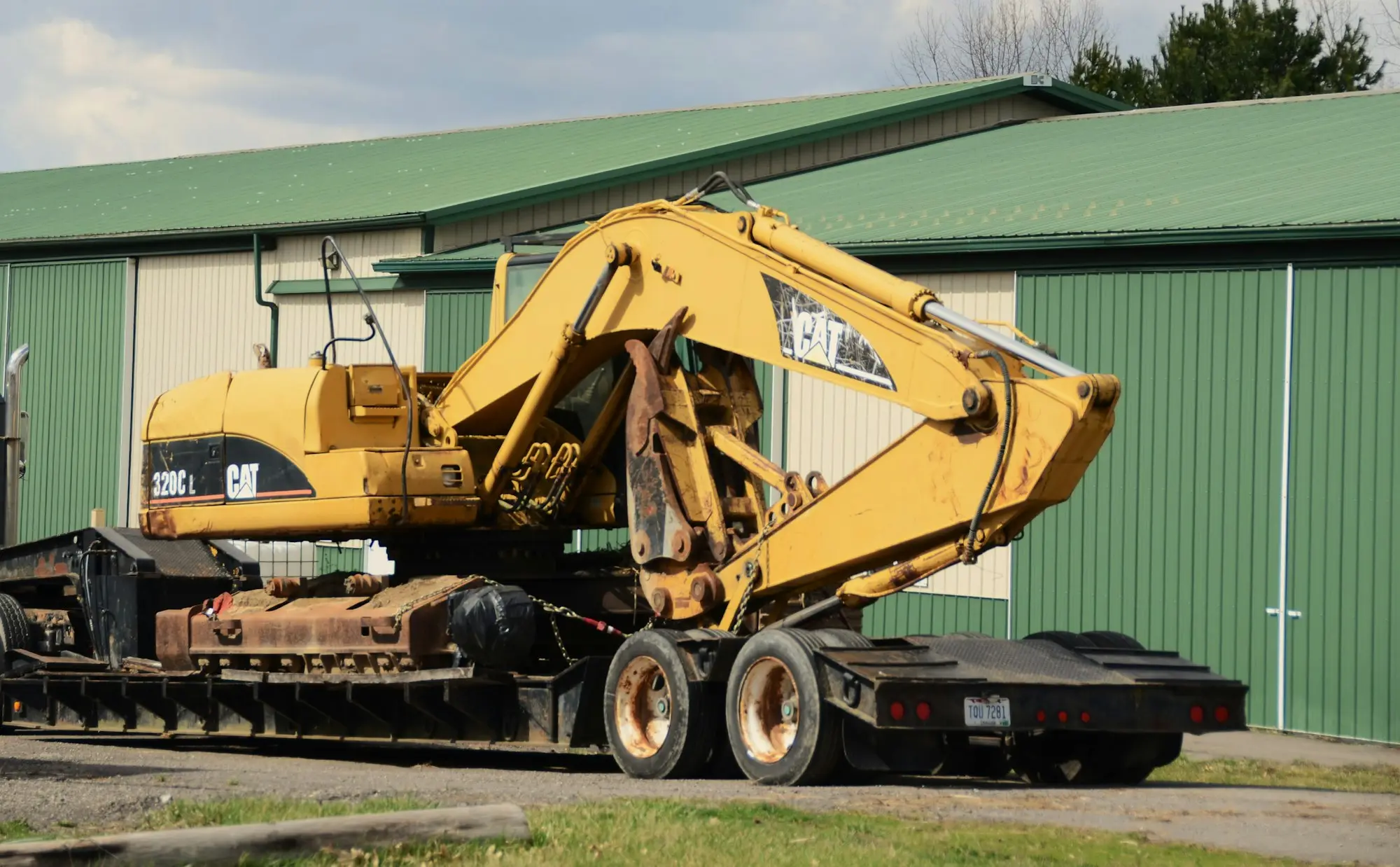
Illustrative only. An earthmoving business finances a 20-tonne excavator for $240k on a chattel mortgage. The lender requires comprehensive cover with its interest noted. The owner’s broker sets agreed value cover, lists all three operators, and confirms the policy covers the machine while it’s being floated between sites.
Eight months later, the float trailer is involved in a roadside incident and the excavator is badly damaged. Because transport cover was confirmed in writing and the operator was listed, the claim proceeds. The lender is paid out from the settlement and the business uses the remainder as a deposit on a replacement. Without the transit cover, it would have been a very different conversation.
A quick checklist before settlement
- Comprehensive cover in place from the delivery date
- Insured value at least equal to the amount financed
- Lender noted correctly as interested party
- All operators listed or covered by the policy definition
- Use, location and transport conditions match how you’ll work
- Attachments, bodies and modifications declared
- Certificate of currency sent to the lender
Our yellow goods finance, truck finance and agricultural machinery finance pages cover the rest of the deal for each asset type.
Ready to finance the machine and protect it properly?
A financed machine that’s properly insured is an asset. One that isn’t is a liability waiting for a bad day. Sorting the finance and the cover together means you start work with both in place.
You can get the ball rolling in about a minute, and no credit check is run when you first enquire. We aren’t in the business of handing your details to a pile of lenders, so you won’t be fending off calls. Someone looks at the machine, the job it’ll do and your business, then phones to talk it through. Answer the form accurately, including what the machine is and where it’ll work, so we can match the right finance on the first attempt.
Frequently asked questions
Do I have to insure a financed truck or machine?
Almost always. Finance contracts usually require the asset to be insured for its full value, with the lender noted, for as long as money is owed. Lenders typically ask for a certificate of currency before they release funds.
What does 'interested party' mean on my policy?
It means the insurer records that the lender has a financial interest in the asset. If there's a total loss claim, the lender is usually paid first, up to what you owe, and any balance goes to you.
Should I choose agreed value or market value?
Agreed value fixes the payout amount when the policy starts, so you know where you stand. Market value pays what the asset is worth at the time of loss, which may be less than you expect. Many owners of financed assets prefer agreed value, but premiums differ, so compare both.
What happens if the machine is written off and the insurance doesn't cover the loan?
You remain responsible for the shortfall. That's why it's important to set an insured value that keeps pace with the loan, avoid large balloons on assets that depreciate fast, and consider gap-style cover where available.
Does my lender need to know if I change insurers?
Yes. Most finance contracts require continuous cover with the lender noted. If you switch insurers, send the new certificate of currency to the lender so there's no gap on their records.
Is machinery breakdown insurance required by lenders?
It's not usually required, but it's worth considering. Business.gov.au describes machinery breakdown cover as paying for repair or replacement of broken-down machinery. For a business whose income depends on one or two machines, it can be the difference between a bad week and a crisis.