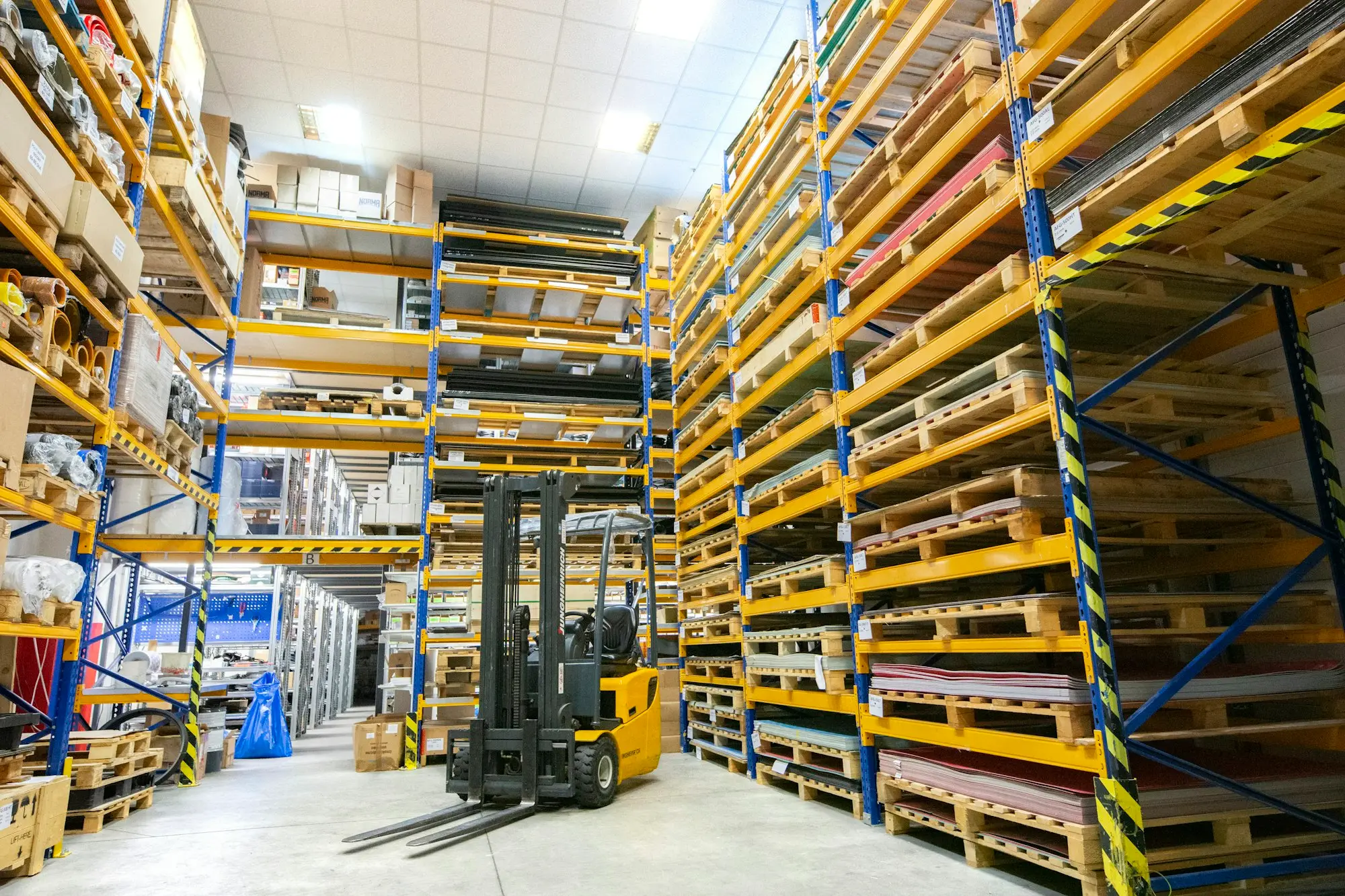
Quick answer
Warehouse fit-outs are usually funded in parts. Movable items such as forklifts, racking systems and some refrigeration can often be financed through equipment finance, while built-in work like office partitions, electrical upgrades and floor works is funded on the business's cash flow or on property security. Budget for racking designed to the current Australian Standard, rated-capacity signage and regular inspections, because safety requirements shape both the cost and the layout.
Key points
- Split the budget into movable equipment and fixed building work; each is funded differently.
- Racking should be designed for your actual loads, with rated capacities marked on the bays.
- SafeWork NSW says formal racking inspections by a competent person are needed at intervals of no more than 12 months.
- Built-in offices, power upgrades and floor works stay with the building, so lenders look to cash flow or property.
- Match the loan term to the lease; a warehouse fit-out on a short lease is a hard sell.
A warehouse fit-out is usually funded in pieces. Forklifts, racking systems and some refrigeration can often go through equipment finance, because they can be moved and resold. Office partitions, power upgrades, lighting and floor works become part of the building, so lenders fund those on your cash flow or on property security. Getting that split right, and budgeting for compliant racking, is most of the job.
Whether you’re an online retailer moving out of a garage, a wholesaler taking a bigger unit, or a manufacturer adding storage, the same logic applies. This guide shows how to break the budget down and what lenders and safety rules expect.
What goes into a warehouse fit-out?
More than people budget for. A typical list includes:
- Storage systems: selective pallet racking, longspan shelving, cantilever racks, mezzanine floors.
- Handling equipment: forklifts, reach trucks, pallet jacks, conveyors.
- Climate and cold chain: cool rooms, freezer rooms, insulated panels, refrigeration plant.
- Building work: office and amenities partitions, kitchenette, extra bathrooms, line marking, floor repairs, roller doors.
- Services: three-phase power, lighting upgrades, data cabling, fire services changes, security systems.
- Soft costs: racking design, engineering, approvals, project management.
Each line has a different resale value and a different useful life, which is exactly what a lender cares about.
How do lenders split the budget?
| Fit-out item | Can it be moved and resold? | Usual funding route |
|---|---|---|
| Forklifts and reach trucks | Yes, strong second-hand market | Equipment finance or chattel mortgage |
| Pallet racking and shelving | Yes, but lower resale value | Often equipment finance; some lenders prefer cash-flow funding |
| Freestanding refrigeration plant | Partly | Equipment finance, depending on the lender |
| Built-in cool rooms and insulated panels | Limited | Cash-flow lending or property security |
| Office partitions, amenities, floor works | No, stays with the building | Cash-flow lending or property security |
| Power, lighting and fire services upgrades | No | Cash-flow lending or property security |
Funding the movable items through equipment finance means only the fixed work needs to be carried by cash flow or property. Forklifts and similar machinery are covered in more detail on our yellow goods finance page. For the fixed component, the main fit-out finance page explains why built-in work can’t act as its own security.
What do the racking safety rules mean for your budget?
Racking is where warehouse fit-outs most often get cheap in the wrong places. SafeWork NSW’s pallet racking fact sheet, updated in December 2025, sets out what good practice looks like. The parts that affect cost and planning:
- Design for your loads. Racking should suit the size, shape and weight of what you store, and be installed and maintained to the manufacturer’s instructions. The fact sheet refers to AS 4084.1:2023 for design and AS 4084.2:2023 for operation and maintenance.
- Rated-capacity signs. The maximum unit load and the total rated capacity for each bay must be clearly marked and never exceeded.
- Proper anchoring. Each footplate needs at least two anchors, and floor fixings must be checked.
- Aisle widths that suit your forklift. The aisle has to work with the turning circle of the truck you’ll actually use.
- Inspections. Formal inspections by a competent person at intervals of no more than 12 months, with regular checks in between, and damage reported and recorded immediately.
- Changes need approval. Reconfiguring beam levels changes safe working loads, so supplier approval is needed first.
Build these into the quote: engineered design, signage, anchoring, rear protection where single-row racking can be reached from behind, and an annual inspection budget. A cheaper quote that skips them isn’t cheaper for long.
Planning a warehouse fit-out now? Tell us the scope in a short enquiry and we’ll look at how the pieces could be funded. There’s no credit check at that first step.
How does the lease affect warehouse fit-out funding?
Just as with shops and offices, the loan should finish well inside the lease. Industrial leases are often longer than retail ones, which helps, but check:
- Term and options. If you’re relying on an option, know what conditions apply.
- Landlord consent. Racking anchored into the slab, mezzanines and cool rooms usually need written approval.
- Make-good. What must be removed at the end, and what that will cost. Dismantling racking and removing cool rooms isn’t free.
- Floor capacity. Heavy racking and mezzanines put point loads on the slab. If you’re unsure the floor can take them, get it checked before you buy the racking.
How are warehouse fit-out costs treated at tax time?
Splitting the budget helps here too. The ATO’s page on depreciating assets and capital expenses explains that depreciating assets such as machinery are claimed over their effective life, with small business incentives available for eligible items, while capital works such as building improvements and structural works are deducted over a number of years. Ask each supplier to invoice movable equipment and building work separately, so your accountant can allocate them correctly.
Should you fit out the whole warehouse at once, or in stages?
It depends on how quickly the space will fill. Many growing businesses take a warehouse bigger than they need today, expecting to grow into it. Fitting out every bay on day one ties up money in racking that sits empty for a year, while fitting out too little means a second disruption and a second round of installers a few months later.
A staged approach often works well:
- Stage one: what you need to move in. Enough racking for current stock plus a sensible margin, the handling equipment, the office and amenities, and the power and safety essentials.
- Stage two: growth capacity. Further bays of racking, extra cool room space or a second forklift, added when stock levels or sales justify it.
- Plan the layout for both stages now. Get the racking designer to draw the full layout, so stage two slots in without moving what’s already anchored.
Lenders like this approach because the first loan is sized on what the business can carry now, and later stages can be funded on the stronger trading that justified them. It also suits businesses whose sales are seasonal or lumpy, such as online retailers heading into peak season or manufacturers taking on a big new contract.
Illustrative example
Illustrative only. An online homewares retailer is moving from a small unit into a 1,500 square metre warehouse on a new seven-year lease. The fit-out budget is $420k: $85k for two forklifts, $120k for engineered pallet racking and longspan shelving, $140k for an office mezzanine, amenities and power upgrades, $45k for a small cool room for candles and skincare stock, and $30k for design, approvals and contingency.
The forklifts and racking are funded through equipment finance. The business has two years of strong banked sales, so the remaining $215k of fixed work is funded with an unsecured facility sized on turnover, released against the builder’s progress claims. The racking supplier’s quote includes design to the current standard, load signs and the first annual inspection.
Ready to fit out the warehouse?
A bigger warehouse is usually a sign the business is growing, and a well-planned fit-out lets you use every square metre safely from day one. If you’ve got quotes for the racking, the equipment and the building work, we can help you work out how to fund each part.
The enquiry takes about a minute and there’s no credit check when you first get in touch. Your details aren’t shopped around to a crowd of lenders. A real person reads your scope, separates the movable equipment from the fixed work and phones you with the options. Please fill the form in accurately, including the lease term and total budget, so the first structure we suggest fits.
Frequently asked questions
Can racking be financed as equipment?
Often, yes. Many financiers treat bolted-down pallet racking as equipment because it can be dismantled and moved, although its resale value is lower than a forklift's. Lenders vary, so ask how they treat it before you lock in the quote.
Which Australian Standard applies to pallet racking?
SafeWork NSW refers to AS 4084.1:2023 for steel storage racking design and AS 4084.2:2023 for operation and maintenance. Your racking supplier should design and certify the system to suit your loads.
How often does warehouse racking need inspecting?
SafeWork NSW says formal inspections by a competent person should happen at intervals not exceeding 12 months, with regular checks in between. Damage should be reported immediately and recorded.
Can I change my racking layout later?
Changing the configuration, such as moving beam levels, alters the safe working loads. SafeWork NSW says supplier approval is needed first, and modifications should be approved by the manufacturer, supplier or a qualified engineer.
How are warehouse fit-out costs treated for tax?
The ATO treats depreciating assets such as machinery differently from capital works such as building improvements and structural works, which are deducted over a number of years. Ask your suppliers to invoice the two separately so your accountant can allocate them.
Do I need property security for a warehouse fit-out?
Not always. Established businesses with steady banked turnover can often fund the fixed work unsecured. New operations, or bigger projects, usually need property security for the parts that can't be financed as equipment.