Quick answer
Green finance is equipment or asset finance for things that cut energy use or emissions: rooftop solar, batteries, electric vehicles, heat pumps, LED lighting and efficient refrigeration. It suits businesses whose power or fuel bills are large enough that savings can offset repayments. Lenders assess the business's cash flow and the installer's quote, and some offer discounted terms for eligible assets. Government incentives can reduce the upfront cost.
Key points
- Covers solar, batteries, EVs, heat pumps, LED lighting and efficient plant.
- The goal is for energy savings to cover most or all of the repayments.
- Government incentives such as the Cheaper Home Batteries Program apply to businesses as well as households.
- Owners who rent their premises need landlord consent for fixed installations.
- Typical assets
- Solar, batteries, EVs, efficient equipment
- Structures used
- Chattel mortgage, lease, loan
- Lenders focus on
- Cash flow, quote, installer
- Battery incentive
- Open to small businesses
For many businesses, energy is now one of the biggest bills after wages and rent. A cool room that runs around the clock, a workshop full of compressors, a fleet of delivery vans or a commercial kitchen can turn power and fuel into a serious line item. Green finance lets you pay for the equipment that shrinks those bills over time, ideally with the savings doing most of the work on the repayments.
It isn’t a separate kind of loan so much as a purpose: familiar structures like a chattel mortgage, a lease or a business loan, applied to assets that cut energy use or emissions, sometimes with sharper terms because of who’s backing them.
What can green finance pay for?
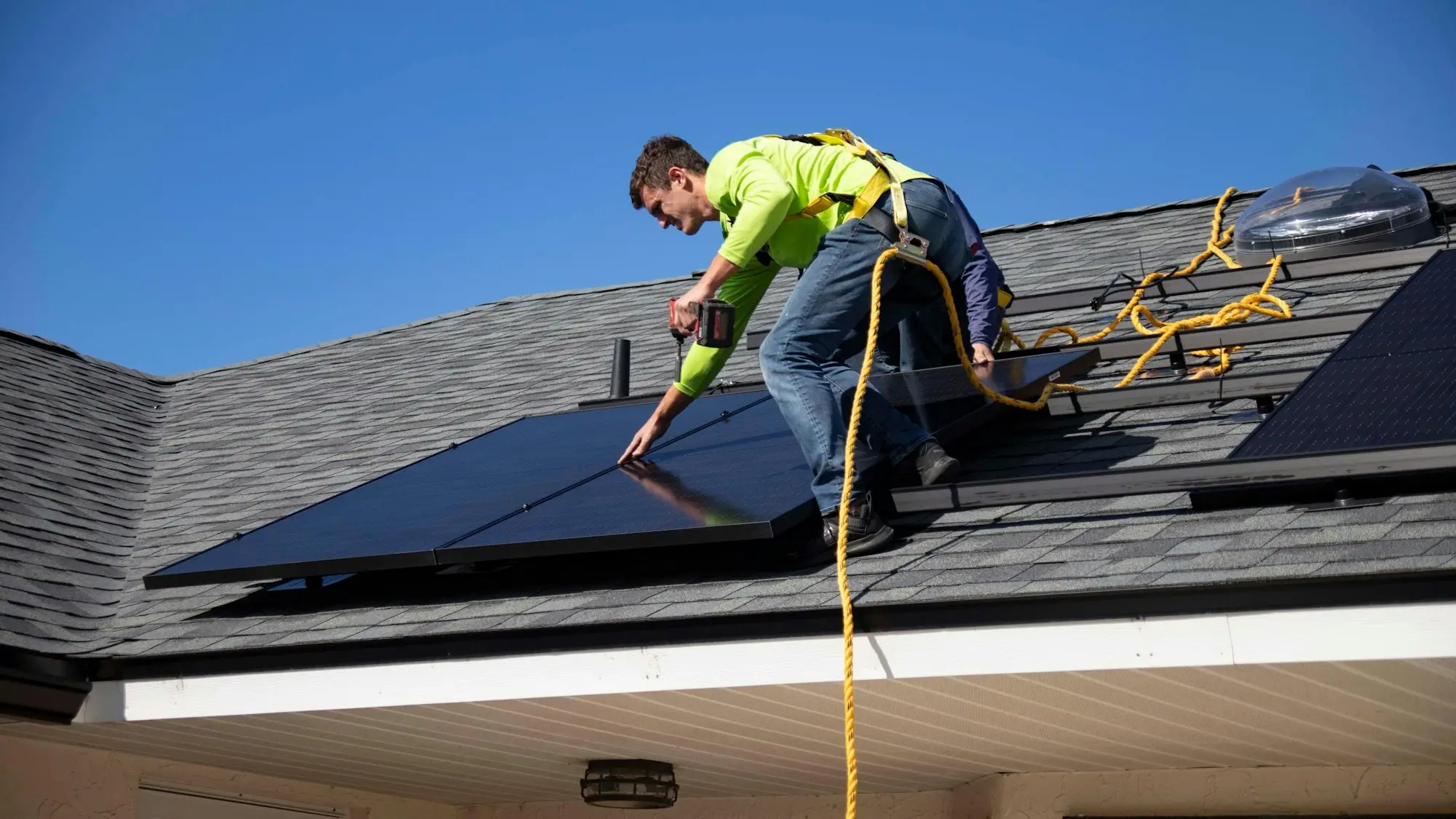
- Rooftop solar on owned or leased premises, including inverters and monitoring.
- Battery storage to shift solar generation into the evening or cut peak demand charges.
- Electric and hybrid vehicles, plus workplace and depot chargers.
- Heat pumps for hot water and heating, common in hospitality, aged care and gyms.
- Efficient refrigeration, a big one for food retail, butchers and cafés.
- LED lighting, variable-speed drives and efficient compressors for warehouses, factories and workshops.
- Agricultural upgrades such as solar pumping and more efficient irrigation.
The common thread is a measurable drop in energy or fuel use. Lenders like projects where the business case is easy to see.
How does green finance work?
The structures are the same ones used for any equipment purchase:
| Structure | How it works | Good fit for |
|---|---|---|
| Chattel mortgage | You own the system from day one; the lender holds security over it | Solar, batteries and EVs you’ll keep for years |
| Finance or operating lease | The financier owns it and you pay to use it | Vehicles and equipment on an upgrade cycle |
| Unsecured business loan | Funds sized on turnover, no charge over the asset | Mixed projects including electrical work |
| Property-secured loan | Secured against residential or commercial property | Large whole-site upgrades |
Where green finance differs is in the funding behind some lenders. The Clean Energy Finance Corporation, a government-owned green bank, partners with commercial lenders to offer discounted finance for eligible assets. In July 2026 the federal government announced an expansion of one such program to help more small and medium businesses fund rooftop solar, battery storage, electric vehicles, efficient equipment and recycling technology. Availability and eligibility rules vary by lender.
For a broader look at funding machinery and plant, see our equipment finance guide; for fleets, vehicle finance covers the details.
Which incentives can you stack on top?
Finance pays for what’s left after any incentive. Two worth knowing about:
The Cheaper Home Batteries Program. Despite the name, business.gov.au confirms it’s open to households, businesses and community organisations installing eligible small-scale batteries from 5 kWh to 100 kWh, with the program listed as running to 31 December 2030. The discount comes through small-scale technology certificates, and the Clean Energy Regulator explains that from 1 May 2026 the support began reducing faster and tapering for larger systems, with only the first 50 kWh of usable capacity attracting certificates. In short: the incentive gets smaller over time, so earlier projects benefit more.
The instant asset write-off. Small businesses with aggregated turnover under $10 million may be able to immediately deduct eligible assets costing less than $20,000 each that are first used or installed ready for use on or after 1 July 2023, under the ATO’s instant asset write-off rules. This generally applies where your business owns the asset, so the finance structure you choose matters.
State and territory governments also run their own business energy programs from time to time. Your installer will usually know what’s current in your area.
If you’ve got an installer’s quote in hand, see whether you qualify before the offer runs out.
What do lenders look at?
- Cash flow. Bank statements and BAS showing the business can carry the repayment, even before savings arrive.
- The quote. Itemised, from an established installer or dealer, with brand and model details.
- Accreditation. For solar and batteries, accredited installers and approved products are usually required for incentives.
- Your premises. If you rent, landlord consent and a lease long enough to outlast the finance.
- The savings case. Not always required, but a credible estimate based on your real usage strengthens the application.
What does it cost?
Pricing is set on your business and the asset. Discounted programs can sharpen the terms on eligible equipment, but the usual factors still apply: trading history, credit file, the size of any deposit or balloon, term length and fees (establishment, documentation and PPSR registration). Ask for the total cost over the term and set it against the projected savings across the same period.
Illustrative example
Illustrative example: A family-run butcher shop on a main street pays heavily for refrigeration that runs day and night. The owners own their building. An installer quotes $46k for a rooftop solar system, a battery and replacement display fridges. After the battery incentive, the remaining cost is financed through a chattel mortgage over five years. The installer’s estimate, based on the shop’s interval meter data, shows the reduction in power bills covering most of the monthly repayment, and the system keeps working long after the loan is cleared.
Common mistakes
- Relying on generic savings estimates. Use your actual meter data.
- Waiting too long on battery incentives. They are designed to step down over time.
- Forgetting landlord consent. Fixed installations on rented premises need it in writing.
- Financing longer than the asset’s useful life. Match the term to realistic performance.
- Ignoring tariff changes. A battery’s value depends on how you’re billed for power.
- Skipping the maintenance plan. Inverters, batteries and chargers need occasional servicing, so build that into the budget.
Farms have their own energy story, from solar pumping to cold storage, which our farm business loans page touches on, and factories weighing up efficient plant will find more on the manufacturing business loans page.
Ready to put your energy bill to work?
If the numbers on your next power bill make you wince, a short enquiry is a good place to start. It takes roughly 60 seconds, and there’s no credit check involved in asking. We won’t send your details out to a long list of financiers; a real person reviews the project, the quote and how your business trades, then calls to walk through the best structure. Please be precise on the form, including what you’re installing, the quoted cost and whether you own the premises, so we can match you correctly from the outset.
Frequently asked questions
What counts as a green asset for finance purposes?
It varies between lenders, but rooftop solar, battery storage, electric and hybrid vehicles, EV chargers, heat pumps, energy-efficient refrigeration, LED lighting and efficient motors and compressors are commonly included. Some discounted programs publish their own list of eligible equipment, so it's worth checking before you choose a model.
Can my business get the battery discount?
Yes, small businesses are included. The Cheaper Home Batteries Program, run through the Small-scale Renewable Energy Scheme, covers households, businesses and community organisations installing eligible batteries between 5 kWh and 100 kWh. The support has been tapering since 1 May 2026, so the timing of your installation matters.
I rent my premises. Can I still finance solar?
Possibly. You'll need the landlord's written consent for a fixed installation, and lenders will check the lease runs long enough to cover the finance. Some tenants negotiate a cost-sharing arrangement with the landlord, since the property gains value from the system.
Do the savings have to cover the repayments?
They don't have to, but it's the best way to judge a project. Ask your installer for an estimate based on your actual interval meter data rather than a generic figure, and compare that with the repayment schedule over the term.
Can I combine green finance with the instant asset write-off?
If your business owns the asset, for example through a chattel mortgage, and meets the ATO's turnover and cost limits, an eligible item may qualify. A leased asset is owned by the financier, so the position is different. Your accountant can confirm before you sign.
Is green finance only for new equipment?
Mostly. Incentive schemes usually require new, approved products installed by accredited installers, and discounted lending programs tend to follow the same rule. Used vehicles and second-hand equipment can still be financed through ordinary asset finance.