Quick answer
Hire usually wins for equipment you use only a few weeks a year, while finance wins once you use it often enough that a year of hire charges exceeds a year of repayments plus storage, insurance and servicing. Work out your real days of use, multiply by the hire rate, and compare that with the full annual cost of owning. Availability in peak season can tip the decision too.
Key points
- Count the days you actually use the equipment, not the days you think you do.
- Owning costs money all year: repayments, insurance, storage, registration and servicing.
- Hire costs only when used, but peak-season availability can be the real problem.
- A finance lease or rental can suit gear you need regularly but don't want to own.
- Owned equipment can earn when idle if you hire it out, but plan for wear and insurance.
For a machine you use only a few weeks a year, hiring usually costs less. Once you use it often enough that a year of hire charges is more than a year of repayments plus insurance, storage and servicing, financing starts to win. Count your real days of use, multiply by the hire rate, and compare that with the full cost of owning. Peak-season availability can settle it.
Seasonal businesses face this question all the time. A landscaper needs a mini excavator mostly in spring and autumn. A grower needs a second harvester for six weeks. An events company needs a lighting tower and generator every summer weekend. The machine works hard for part of the year and sits still for the rest.
How do you work out the break-even point?
Start with two numbers.
The annual cost of hiring. Multiply the days you’ll actually use the equipment by the full daily cost of hire: the rate, delivery and pick-up, fuel, any damage waiver and the time someone spends collecting it. Be honest about days. Look at last year’s job sheets or invoices, not your memory.
The annual cost of owning. Add up a year of:
- finance repayments;
- insurance;
- registration, if it’s a vehicle or registrable plant;
- servicing and repairs;
- storage, if you’ll need extra space;
- an allowance for wear, tyres, tracks and consumables.
Divide the annual cost of owning by the all-in daily hire cost. The answer is your break-even: the number of days a year you’d need to use the machine for owning to cost the same as hiring. Fewer days than that, hire. More, finance.
What does the comparison look like side by side?
| Hire | Finance and own | Lease or long-term rental | |
|---|---|---|---|
| Upfront cost | None or a bond | Possibly a deposit | Usually little or none |
| Cost when idle | Nothing | Repayments, insurance, storage keep running | Payments keep running |
| Availability in peak season | Depends on the hire company | Always yours | Yours for the term |
| Repairs and servicing | Usually the hire company | Your business | Depends on the contract |
| Can earn money when idle | No | Yes, if you hire it out | Usually not |
| Tax treatment | Generally a business expense | Usually depreciated, or written off if eligible | Payments generally an expense |
business.gov.au’s comparison of leasing or buying vehicles and equipment captures the core trade-off: buying lets you choose exactly what you want and modify it, but you handle all repairs and maintenance; leasing gives regular payments and quicker upgrades, but you “may pay more overall”. Hire is the far end of that scale: you pay only when you use it.
What hidden costs change the answer?
On the hire side:
- Peak-season shortages. If everyone in your district needs a tipper in the same fortnight, availability disappears and rates can rise. A lost day of work can cost more than a week of repayments.
- Travel and turnaround. Collecting and returning equipment eats time.
- Familiarity. Operators are often quicker and safer on a machine they know.
On the owning side:
- Idle months still cost money. Repayments, insurance and storage don’t pause in winter.
- Obsolescence. Some equipment dates quickly.
- Your time. Owning means organising servicing, registration and repairs.
If you’re leaning towards owning, the equipment finance page explains how lenders assess the asset and your trading. If you’d like to test the numbers with someone who does this every day, send a quick enquiry; there’s no credit check at that stage.
Is there a middle road between hiring and buying?
Yes, two of them.
A lease or long-term rental. For equipment you need regularly but would rather not own, a finance or operating lease gives you the asset for a fixed term with predictable payments. It doesn’t solve the idle-months problem, but it avoids the upfront cost and suits gear you’d upgrade on a cycle anyway.
Seasonal repayments. Some lenders will structure repayments around a business’s cash flow, with bigger payments in the busy months and smaller ones in the quiet months. This is common for farm machinery and other seasonal assets. The seasonal business loans page explains how lenders look at businesses with uneven income.
There’s also a third option some owners use: finance it and hire it out. An owned machine that earns hire income in your quiet months can cover part of its own repayments. Check that your insurance and finance contract allow it, and allow for the extra wear.
How does tax affect the decision?
Tax shouldn’t drive the decision, but it can shift the numbers.
Hire charges for business use are generally treated as an expense. Owned equipment is usually depreciated over its effective life. The ATO has confirmed the $20,000 instant asset write-off is permanent for businesses with aggregated turnover under $10 million, claimed in the year the asset is first used or installed ready for use. The ATO’s instant asset write-off guidance adds that it applies to second-hand assets as well as new ones, and that assets costing more go into the small business pool.
A used machine under the threshold, bought and put to work before 30 June, can therefore look quite different on your tax return from a year of hire bills. Ask your accountant to run both.
What if your busy season keeps getting longer?
That’s often the real trigger. A business hires a machine for six weeks a year, then ten, then fourteen, and nobody stops to redo the sums. Growth quietly turns a sensible hire decision into an expensive habit.
Signs it’s time to recheck the numbers:
- You’ve hired the same type of machine more than a handful of times this year.
- You’ve turned down or delayed a job because hire gear wasn’t available.
- Your hire invoices for one item add up to a large share of what it would cost to buy a good used one.
- A new contract or customer will need the equipment on a regular schedule.
Set a reminder to run the break-even test once a year, ideally a couple of months before your busy season, so there’s time to arrange finance and take delivery before the work starts.
An illustrative example
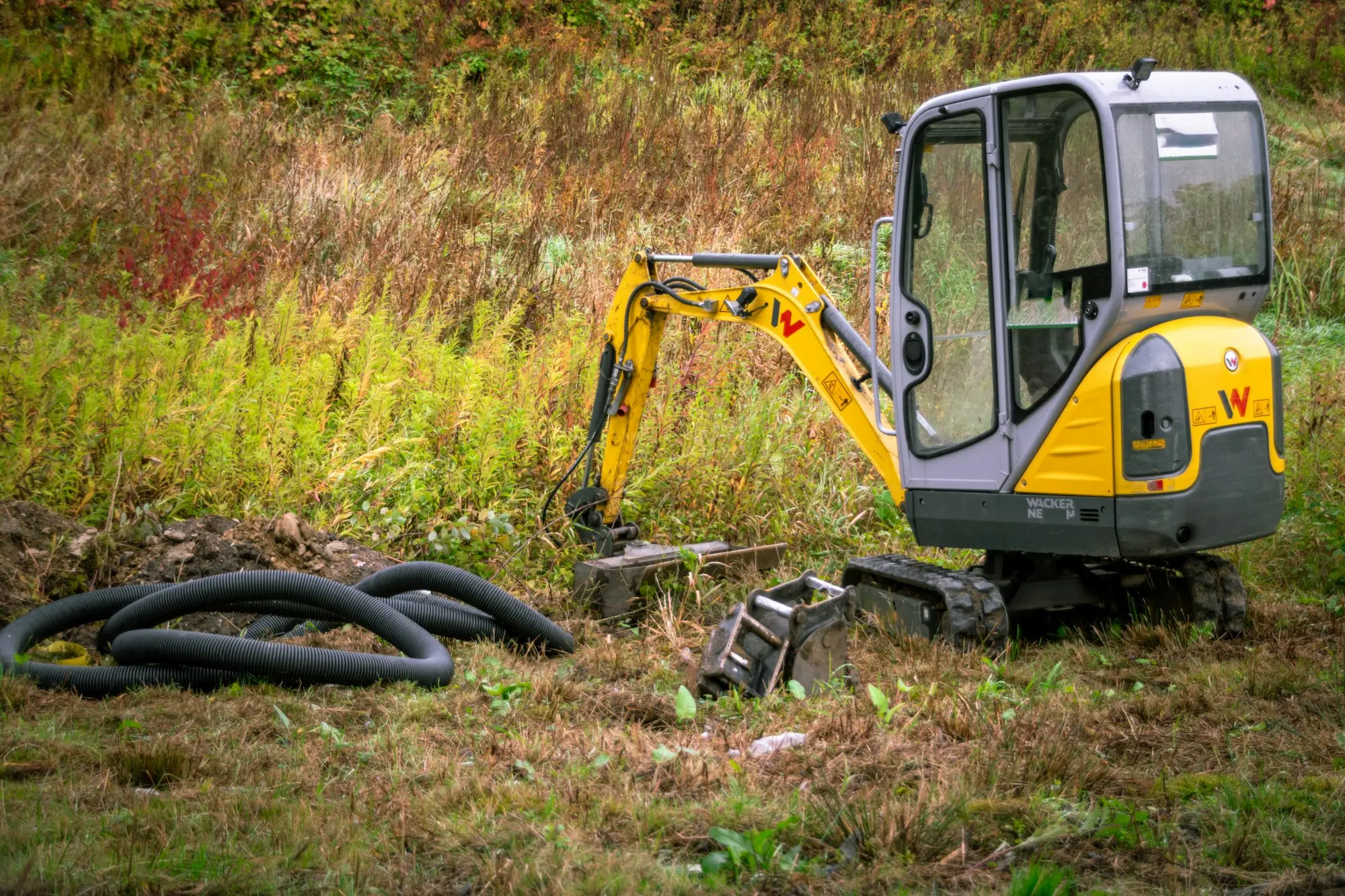
Illustrative only. A landscaping business hires a mini excavator for most of its retaining-wall and drainage jobs. Last year’s invoices show 70 hire days, mostly in spring and autumn. With delivery, fuel and damage waiver, the all-in cost works out to roughly $26k for the year.
A used mini excavator in good condition would cost about $60k. Over a four-year chattel mortgage, the owner estimates a year of repayments, insurance, registration, servicing and trailer storage at around $21k. At 70 days, owning is cheaper. It also solves the bigger problem: twice last spring, no hire machine was available for a week.
The owner finances the excavator, and in winter rents it to a plumbing business down the road for a few weeks, which covers a couple of months of repayments. The landscaping business loan page has more on how landscapers fund growth.
Done the sums and owning comes out ahead? Here’s the next step
If your break-even says it’s time to stop hiring, the next question is what you could finance, and on what kind of repayment pattern. That depends on the machine, your trading and how seasonal your income is.
It’s a one-minute form, and nobody runs a credit check when you first enquire. Your details stay with us rather than being sprayed across a list of lenders, which means no barrage of calls. Someone real, who gets that your year has peaks and troughs, reviews what you’ve sent and rings you. Please fill it in accurately, including what the machine is and roughly how many days a year it works, so the first option we put forward is the right one.
Frequently asked questions
How do I work out whether to hire or finance equipment?
Estimate how many days a year you'll use it and multiply by the hire cost per day, including delivery and fuel. Then add up a year of owning: finance repayments, insurance, storage, registration, servicing and wear. Whichever is lower is your starting point; availability and convenience may tip it either way.
Is hiring equipment tax deductible?
Hire costs for business use are generally treated as a business expense, while owned equipment is usually depreciated, and assets under the $20,000 threshold may be written off in the year they're first used or installed. Your accountant will confirm the treatment for your business.
What if I can't get hire equipment in the busy season?
That's one of the strongest reasons to own. If every business in your region needs the same machine in the same months, hire availability drops and prices can rise. Losing a few days of work because a machine isn't available can cost more than the finance.
Can I finance equipment and hire it out when I'm not using it?
Many businesses do. Hiring out an owned machine in the quiet months can cover part of the repayments. Check that your insurance covers hiring out, that your finance contract allows it, and allow for the extra wear and the time it takes to manage.
Can finance repayments be matched to my busy season?
Some lenders offer seasonal or structured repayments, with larger payments in busy months and smaller ones in quiet months. It's more common for agricultural and seasonal businesses. Ask about it when you apply.
Should I buy new or used for seasonal equipment?
Used equipment can make sense for gear that sits idle much of the year, because the purchase price is lower and the repayments smaller. Check its condition, service history and whether anything is still owed on it before you buy.